Pages

Tuesday, 21 December 2021

Meet some local wildlife ambassadors at Potomac Overlook

If you haven't yet had the pleasure of visiting this park & nature center, I highly recommend it. It was the first nature center I visited with live animals, so I was really excited to find it as I started a journey into studying local wildlife in my community of Northern Virginia. Also this nature center is open every day, even weekends, so its a great resource. 

Their website describes the park as such:

Explore the natural world on 67 acres of wild and cultivated land at Potomac Overlook Regional Park in Arlington, Virginia. Hike miles of trails while following interpretive displays to learn about Northern Virginia’s flora and fauna. Our educational organic vegetable garden hosts school trips and summer nature camps, while other demonstration gardens showcase native plants and insects and live animal displays. Visit the James I. Mayer Center for Environmental Education to learn about the connections between humans and the natural world. Potomac Overlook Regional Park also hosts an outdoor summer concert series and a popular summer camp for kids.

This fall, I had the pleasure of volunteering at the Nature Center located at Potomac Overlook. I signed up to do animal care for amphibians and reptiles. 


When you first walk in, this is what you will see (below). To the left, the large cage is actually home to an adorable screech owl named Smoke. Many people, especially children, will gleefully exclaim upon seeing this owl, "Awww its a baby owl!" Actually, Smoke is a fully grown Eastern Screech Owl. This species of owl only grows 6 - 10 inches tall when full grown. In the outdoor raptor exhibit, recently remodeled, there are two other owl species in residence - a Great Horned Owl and a Barred Owl, as well as a Red Shouldered Hawk. 


Here is a photo of Screech, who was at the Meadowlark Lights Show for an educational program:

Photo credit: Roving Naturalist, Matt Felperin

Some fun facts about Eastern Screech Owls, Megascops asio:
  • Eastern Screech-Owl pairs usually are monogamous and remain together for life.
  • These owls readily accept nest boxes; consider putting one up to attract a breeding pair.
  • The oldest recorded Eastern Screech-Owl in the wild was at least 14 years, 6 months old. 
My favorite area of the Nature Center is the snake area, where AJ and his team care for six native species of snakes, including a Copperhead named Abe, an Eastern Kingsnake named Louie, two Black Rat snakes named Houdini and Tony, two Corn Snakes named Sugar and Spice, a Mole Kingsnake named Noodle (!) and a Pine Snake named Al. 


Visitors are welcome to spend time in this lovely room, if there is no programming going on. It is very relaxing to sit in front of the large window and read animal stories to children - they have a great collection of picture books. If your child really loves animals, consider doing their birthday party at the Nature Center, and they will get to meet some of the Center's animal residents up close!


Here is one of the turtles that I fed while I was a volunteer. This turtle is named Sunny, and she is a Box Turtle. She was previously kept as a pet. The staff believe she may be 15-20 years old. 


This beautiful snake, Al the Pine Snake, really fascinated me because of how rare this species is in Virginia. Scientists are currently looking for evidence that this snake still lives in our state, but they are hard to find because they are fossorial, meaning they spend most of their time underground. (See my other post about this species).


Here is a short video of Al which shows just how big this snake is. He is beautiful!


I really enjoyed volunteering here, getting to know the awesome staff and speaking with the visitors who came in. I will continue to volunteer occasionally with the Center, helping out with interpretation events because I love talking to people about animals.

They also have a small gift shop area with some delightful gifts for the animal lover in your life. 

Sources:

Sunday, 12 December 2021

Exciting News and Birding Highlights

Good news!

If you have followed my blog, you may know I have been looking for professional opportunities. Well, hear-ye, hear-ye, I am beyond grateful to share that I accepted a position at Audubon Society of Northern Virginia (ASNV), where I will be managing the adult education programs and supporting the chapter's work on conservation, advocacy, and youth education. I am thrilled and honored to be selected for the position, and very excited for the opportunity. 

New office, yay!

From ASNV's website

"Our mission is to engage all Northern Virginia communities in enjoying, conserving, and restoring nature for the benefit of birds, other wildlife, and people. We advance our mission through educational programs, citizen science, and advocacy initiatives. We envision a world where people, wildlife, and their habitats thrive."

I am very excited to get to know everyone who is involved with ASNV - the staff, board, volunteers and members. 

My Birding Journey

I have wonderful early memories of going to feed ducks with my mom. I spent much of my childhood playing in nature and visiting parks with my family. I remember an occasion when I set up a laundry basket trap and spent hours trying to catch a sparrow. I was never successful at it, luckily, but I had a great deal of fun watching them flit around and take dust baths in the yard. My mom finally caved and brought home a beautiful pair of budgerigars (or parakeets) which are actually a small species of parrot. (Species, my favorite podcast, has a great episode on them and how insanely intelligent they are. Listen here.)  

Last year I had the great fortune to spend four months in Costa Rica with a wonderful birder, Nina Romano, who was kind enough to lend me her binoculars. Then this past summer, at Nature Camp, I had the life-changing experience of holding a barn owl named Nono (see blog post) and wow. I was captivated. (Happy news, Nono was released!)

I got my own first pair of binoculars in August 2021, to prepare for the Arlington Regional Master Naturalist program. Matt Felperin gave us a fantastic overview of ornithology and took us out birding at Algonkian Park. I have also participated in Northern Virginia Birding Club, Huntley Meadows Birding Group and Birdability events, and learned a ton from birding friends like Emerson Milam and Stephen Perry. For my birthday, I received a copy of Wingspan (highly recommend). 

Today's Outing

This morning I enjoyed a lovely birding outing with my ARMN classmate, Katherine Wychulis, her friend Jenny and our new birding friend, Christopher. One of the best things about birding is how friendly birders are, and how eager they are to help a new birder like myself. (Thank you Christopher for sharing your scope!)

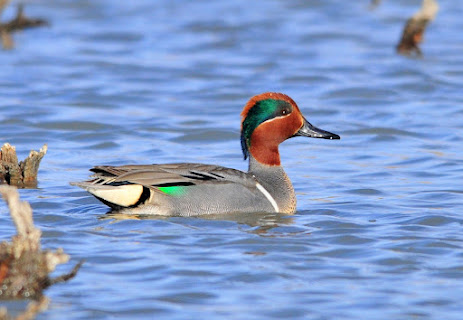
As a group we observed 28 species, but I will share with you my favorite four, which are all species of ducks that I have never seen before today. What a great day!

A wonderful comic called Bird and Moon once described winter as "weird bird time." 

Hooded Merganser, Lophodytes cucullatus

Photo credit: Len Blumin (link)

Fun facts: 
  • Hooded Mergensers dive for fish, crayfish, and other food, seizing it in their thin, serrated bills.
  • These ducks often display "brood parasitism," which means they lay eggs in other birds nests as a strategy to increase reproductive outcomes. 
  • Listen (courting male sounds like a frog!)
  • Read more

Northern Shoveler, Spatula clypeata

Photo credit: Alan Vernon (link
Fun facts: 
  • Its 2.5inch long spoon shaped bill has 110 comblike projections along its edges, which filter out tiny crustaceans and seeds from the water.
  • If startled while on its nest, a female Northern Shoveler will defecate on her eggs before departing to deter predators. 
  • Listen (males make a wheezy took-took sound)
  • Read more
Green-Winged Teal, Anas crecca

Photo credit: Tom Koerner (link
Fun facts:
  • These ducks are little! Their length varies from 12.2-15.3 in, vs. a Mallard duck which are 19.7-25.6 in. 
  • Green-winged Teals have closely spaced, comblike projections called lamellae around the inner edge of the bill, which they use to filter tiny invertebrates. 
  • Listen (males whistling and rapid chitter)
  • Read more

Northern Pintail, Anas acuta

Photo credit: Frank Schulenburg (link

Fun facts: 

  • Northern Pintails migrate at night at speeds around 48 miles per hour. 
  • The longest nonstop flight recorded for a Northern Pintail was 1,800 miles.
  • Listen (male makes a wheezy trainlike whistle)
  • Read more

Here is the comic, by the way, that inspired my focus on ducks for this post. I highly recommend Rosemary's webcomic, called Bird and Moon. Check it out here. Also she has a very cute shop full of great presents for birders. 

Image credit: Rosemary Mosco (link


Sources:

https://www.allaboutbirds.org/

https://www.audubonva.org/

https://www.birdandmoon.com/

Tuesday, 30 November 2021

Belted Kingfisher: The Bird That Tunnels & Birding Resources

 While on a walk this past weekend at Meadowlark Gardens, I heard an interesting trill or rattle sound. I looked up and felt awe-struck by a gorgeous Belted Kingfisher flying over the pond and up into a tree, right next to us. 

Photo: Mick Thompson (link)

While there are four species of Kingfisher in North America, the Belted Kingfisher, Megaceryle alcyon is the only one that is seen in Virginia - so this bird is easy to identify even for the most beginner birder. However, it is not as common as some birds, so you have to be fairly lucky to see it at all. This past Sunday was my first time seeing one up close, and it is a striking bird, both in color, call and behavior. 


Photo: Andy Morffew (link)

Kingfishers, like most birds, are sexually dimorphic, meaning the males and females do not look alike. However, the Belted Kingfisher is unusual in that the female of the species is more colorful - they have the orange belt, while the males do not. According to All About Birds, Kingfishers are very territorial birds, and some scientists hypothesize that the orange band allows males to differentiate females from rivals, but more studies are needed. 

Photo: marneejill (link)

This bird is often seen around wetlands and water bodies, where it hunts fish by plunging headfirst into the water and grabbing fish with its beak. According to Audubon Society, this species: 
"...typically feeds on small fish, usually those less than 4-5" long. Also eats crayfish, frogs, tadpoles, aquatic insects. Occasionally takes prey away from water, including small mammals, young birds, lizards. Reported to eat berries at times."
This neat video below shows how easily a Belted Kingfisher can pluck fish out of the water. 


This species has an interesting nesting approach - they actually dig tunnels, three to six feet long (!) into the the dirt of steep, sandy banks, with the nest chamber at the end. Both male and female help dig the nest tunnel. Amazing! You can read more about this nesting behavior here. Unfortunately, this species may be declining due to habitat loss and nest disturbance during breeding season. You can help this species by supporting organizations like Audubon that work on conservation and protection of these amazing animals. I recommend you join your local chapter and go out on a bird walk or attend a free Audubon Afternoon lecture. 

My local chapter, Audubon Society of Northern Virginia, has some great resources on their website:
  • Videos of past online events
  • This handy, printable bird checklist for Northern Virginia
  • The fantastic Audubon at Home program for a free home-consult on designing your native plant landscaping (native plants are the best bird feeders)
  • Free upcoming webinar (Dec 16) to prepare for the Christmas Bird Count
Some other cool resources on birding: 
  • Birdability, making birding accessible to all
  • Northern Virginia Birding Club 
  • This podcast featuring Matt Felperin's recommendations on great spots and good binoculars (I bought mine based on his suggestion)
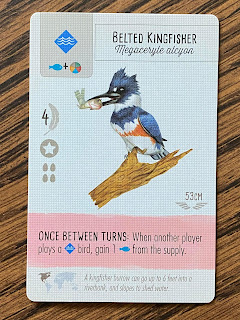
  • Wingspan, a beautiful and scientifically accurate strategy game about birds. Below is the Belted Kingfisher card from my set. 

Happy birding everyone!

Sources:

Thursday, 11 November 2021

Have You Seen This Snake (in VA) Since 2013?

The Northern Pinesnake (Pituophis melanoleucus melanoleucus) is a harmless snake we think lives in a few counties in Virginia. It's official conservation and management status is "undetermined." This past week I attended my first meeting of the Virginia Herpetological Society (VHS) a great organization dedicated to protection and conservation of herps (reptiles and amphibians). One of the presentations focused on research from Virginia Tech, led by Professor Hamed, looking for this species of snake. 

Photo credit: FWC Fish and Wildlife Research Institute (link)

Research assistant Sam Van Noy presented on the study's methodology and outcomes so far. The study will be done over three years and has multiple components - a video capture process, regular in-person surveys, boards, and a citizen science component. Below is a poster that the team circulated to ask the public to report any sightings. Over the first year, the team identified a number of snakes, reptiles, and mammals even, but they did not yet find any evidence of a pinesnake. 


The citizen science component was a bit more successful. Most of the images submitted to the research team were incorrect identifications - but there was one photograph submitted from a credible source that depicts a found Northern Pinesnake in Virginia from 2013. This was very exciting because prior to this effort, the last reported sighting was in 1989! 

According to the VHS, this snake may be living in Augusta, Bath, Botetourt or Craig County. The reason the Northern Pinesnake is so elusive is that it is a fossorial snake - meaning that it spends most of its time underground. Some fear this snake may no longer live in Virginia - as its habitat is specialized. As you may have already guessed - this snake is most often found in pine groves (which can grow in sandier soil) because it is easier for the snake to burrow in sandier soils. There is also some concern that this snake may be more likely to be killed because its defense mechanism is to hiss loudly. Some locals refer to this species as the bull snake. It can be intimidating but this is not a venomous species. 

If you want to see one close up, the Potomac Overlook Nature Center is home to a Northern Pinesnake named Al. 

You can help advance science! If you come across a black, white and cream snake in Virginia, either alive or deceased, please follow these instructions below. Remember this is a harmless snake, while it will likely hiss, it does not have venom. 
  1. Try to take a photograph or video of the snake.
  2. Photograph the snake’s head and/or back.
  3. Please note the location, time, and date of your observation. You can provide street numbers or coordinates.
  4. Please note the characteristics of the area where you found the snakes. Please note the characteristics of the area where you found the snakes including the types of trees and soil.
Then submit your photo and information to khamed@vt.edu. 

Sources:
https://www.virginiaherpetologicalsociety.com/reptiles/snakes/northern-pinesnake/northern_pinesnake.php

Monday, 1 November 2021

Why Do Birds Captivate Us?

One of my earliest memories is my mother bringing me to feed ducks at the park. We fed them bread and didn't know any better - I've since learned what a big problem it is. When I was 6 or 7, I spent hours devising homemade traps to capture sparrows in my backyard using a laundry basket, a stick and string. I never caught any, thankfully, but it gave me great joy to watch flocks of them visit my yard. My mother finally caved in to give me parakeets when I was 10 years old - whom I named fluffy and bluebird. 

Fast forward twelve years later, and I am still amazed and captivated by birds, and fortunately no longer trying to capture them in laundry baskets. This summer at Nature Camp I was enamored with a barn owl and a gyrfalcon. I also recently wrote about a great blue heron and its run-in with a bald eagle. 

I've gone out a few times with the Northern Virginia Birding Club, the Monday morning Huntley Meadow birding group, and Birdability. I've started to learn more bird songs through playing the eBird quiz and enjoyed many comics drawn by Bird and Moon. I've even played two different bird themed board games - Wingspan and Fly-A-Way. As I have become more involved in various organizations and efforts on wildlife conservation over the past few years, I have noticed myself repeatedly drawn to birds. 

In Costa Rica last year, I spent some time with a good friend and expert birder, and had the good fortune to spend a few lazy months watching native birds in between trips to the beach. Then back home in Massachusetts, I spent hours watching birds in the yard - the usual characters - robins, cardinals, bluejays. Then one day I saw a bird I had never seen before. A fairly large bird pulling up worms with the robins after a rain. I looked it up and identified it as a northern flicker. 

Photo credit: Pixabay User, Naturelady (link)

I had literally never in my life heard of this bird. It was amazing to me that there are still birds out there, living beside me, whom I have never seen. It seems incredible. I believe this is one of the reasons that people are captivated by birds. They are everywhere, in every environment - a constant companion - but yet there are enough species to always offer up the awe of seeing a new animal for the first time. 

Some other reasons birds captivate us:

  • Birds can fly! We all wish we could fly after watching birds outside our windows soaring, gliding, and zooming through the sky. 
  • Birds are intelligent. We have all seen videos of birds solving complex puzzles - it's impressive. 
  • Some birds speak. Finally, an animal we can communicate with! While there is debate on how much birds understand what they say, the fact they can imitate our speech (and other sounds) makes them immensely captivating. 
  • Birds are so diverse. From penguins to emus to owls to kakapos to warblers - birds have evolved into an amazing array of forms to fill ecological niches. 
  • Birds mating practices remind us of ourselves. David Attenborough's films about birds of paradise and their incredible mating dances remind us of the efforts we go through as humans to attract and impress a partner. Also, some iconic birds mate for life. 
Birds also appeal to a large segment of the population - hunters enjoy shooting birds, seniors enjoy watching a serene birdfeeder on their porch, families enjoy feeding ducks (peas not bread, please), birders of all ages enjoy adding to their lifelist, everyone enjoys watching an osprey dramatically striking a fish. 

Birds are iconic and for many people they represent nature and the outdoors - and so birds make an excellent mascot when working on habitat conservation. As much as I love snakes, I know that snakes will not produce the warm and fuzzy feelings in the general public that is needed to inspire action. Like the mining canary, the wellbeing of bird species in our community is an indicator of how our ecosystems are faring overall. 

In a conversation with my ARMN classmate, Katherine Wychulis, I learned about a harmful insecticide practice that Fairfax County and Prince William County is doing that is negatively affecting bird populations. As described on the Audubon website
"The County sprays at a time when many species of birds are breeding, raising young and some birds, especially warblers, are migrating through Northern Virginia. Caterpillars are an important food source for many birds. The insecticide is potentially deadly not just to the targeted fall cankerworm, but to all exposed butterfly and moth caterpillars. These butterfly and moth species, like the fall cankerworm, provide food for birds, beetles, bats, frogs, spiders and other wildlife. And the insecticide, a commercial application of Bacillus thuringiensis subsp. kurstaki (Btk), can "drift" to other areas outside the spray areas."

While the insect they are spraying for can have some negative impact on tree foliage, the populations fluctuate greatly, and the program is not administering the chemical in accordance with population data. This is a problem. 

Caterpillars are a crucial food source for birds - especially juvenile birds. I learned recently from ARMN that a nest of three chickadees needs 9,000 caterpillars to grow to adulthood! 

If you live in Fairfax County or Prince William County, you can contact your representative to share your concern about this program. To learn more, visit the Audubon Society of Northern Virginia's page on Save the Caterpillars.

Sources:


Wednesday, 20 October 2021

"Oh Possom, My Possom": What we can learn about acting from the Virginia Opossum

Humans enjoy acting and pretending - on stage, in board games or with children. But for the Virginia Opossum, didelphis virginiana, acting is a life-or-death survival mechanism. Here are four lessons we can learn about acting from North America's only marsupial:

Lesson # 1) Whatever type of acting you want to do - go at your own pace. 

Maybe you want to try out a community theater production before you quit your job and move to LA to make it big?

Photo credit: Public Domain pictures (link)

The opossum, a master of disguise, knows this well and walks at a comfortable pace of about half a mile per hour. At top speed, they can waddle about 3.5 miles per hour. You can easily walk after an opossum. Granted, they are nocturnal animals, so they are walking around in the dark. They have long whiskers to help them navigate. They can climb well thanks to their almost human-like hands, opposable big toes and prehensile tail. They can also swim! 

Hollywood and the opossum world share the motto: "Live fast and die young." These animals only live  to be about 1-2 years old in the wild, 3-4 years in captivity. Female opossums are sexually mature at 6 months old. They have two to three litters per year, and raise about eight young - called joeys (like kangaroos). Males are called jacks and females are called jills. There is no word for a group of opossum because they are solitary creatures. The gestational period for an opossum is 12-13 days! This means that  just 12 or 13 days, less than two weeks after conception, tiny opossums the size of jellybeans will independently crawl into the mother's pouch and latch on to a teat for 55 days. 

Lesson # 2) Acting can be competitive - be aggressive!

Believe in yourself and be aggressive, like the opossum. The opossum does an excellent job acting dangerous - when they are actually harmless. If you startle an opossum, they will hiss and show you their 50 teeth, to convince you they are tough. It's an act.

They drool, a lot. This keeps their mouth clean and aids in digestion. But they are very unlikely to have rabies because their body temperature is too low. 

Just leave them alone and they will not hurt you, or your pets.

Photo credit: Pxfuel (link)

Lesson #3) Commit to your role - and if you fake your own death, be convincing. 

Every great soap opera has the part where you think a character is dead, BUT THEN they re-enter the story and it is revealed that they faked their own death. 

Like gambling addicts, opossums also have to look over their shoulder because predators are out there and they want a tasty, safe meal. Opossums are so committed to their role, they even emit a horrible odor, a rotting smell, that combined with their top-notch performance - wards off predators. Most predators are instinctively drawn to live, moving prey, so while the opossum may get beaten up a bit, playing dead actually keeps them alive. 

Photo credit: Wikipedia Commons (link)

In all seriousness though, this trick is actually not voluntary. The opossum, when faced with a life or death situation, experiences a catatonic state, almost like fainting. They will not respond to stimuli, they leave their eyes open and they won't even blink. Opossums can stay in this state for up to 6 hours. 

Opossums take the phrase "break a leg" very seriously! Skeletons of opossums often reveal healed fractures that would kill most animals. This hardy animal can heal quickly. Some animals have evolved to escape, others to fight back when faced with a predator. Opossums have evolved to feign death and survive getting roughed up. They are so tough that one opossum drank a whole bottle of bourbon, enough to kill some humans, and didn't even have a hang-over the next day.  

Lesson #4) Support your community - give back.

When you make it big, remember where you came from. Donate, volunteer, and mentor. Be like the opossum - who eats 5,000 ticks every season - including ticks that carry lyme disease. They also act as part of nature's clean-up crew - eating carrion and roadkill. Opossums even eat venomous snakes, because they are immune! We are even learning about the aging process by studying the genetics of opossums that cause their early aging process. Plus, they are an important part of the ecosystem, acting as both predator and prey in food webs across most of the United States. 

Photo credit: Pixabay user Jalynn (link)

Lesson #5) Hang in there!

Keep trying and you will improve! Have a safety net in place, like the opossum has their prehensile tail. While it's possible for them to hang upside down, it's a myth that they sleep like that, or hang for extended periods of time. Opossums mostly use their tail for balance, to catch them if they lose their grip while climbing, and also for carrying grass & twigs back to their den. Never pick up an opossum by their tail. This can cause serious damage to their spine or dislocate their tail bones. The best way to capture them if necessary is to toss a blanket over them and scoop them up like a cat, and then place into a travel crate for relocation. I recommend calling a humane professional. 

---

It's time that the opossum gets all fandom they truly deserve for being unique, fascinating, harmless and beneficial animals. Also, they are pretty darn cute. I mean really, jacks & jills & joeys?? Adorbs. You can join their fan club by becoming a member of the Opossum Society

Or at the very least, slow down when you see them on the road at night. If you have opossums in your yard, let them be, they are eating ticks back there, or if you must relocate them, choose a humane trapping and relocation service. You can even try to attract opossums to visit your yard by choosing native plants for your yard. 

Sources & Further Reading:

https://opossumsocietyus.org/

https://www.caryinstitute.org/news-insights/media-coverage/opossums-killers-ticks

https://www.livescience.com/56182-opossum-facts.html

https://animals.sandiegozoo.org/animals/opossum

https://podtail.com/en/podcast/species/opossum/

https://opossumsocietyus.org/how-to-attract-opossums-to-your-property/

Opossum: It's Amazing Story

Friday, 15 October 2021

Update: Nono is Free!

Hello friends,

I just heard from Corey Basham, who was taking care of a barn owl named Nono. See my original post about Nono here. 

I met Corey Basham at Nature Camp back in August. I just got word from him that Nono has recently been released! 

"After fattening her up significantly and doing some live prey exercises she was released in a park on the edges of the city [Richmond]." -Corey

Photo credit: Corey Basham

It brings me great joy to know that Nono is out there, hunting mice and using the incredible abilities that owls have adapted over the last 80 million years. Thank you to Corey for keeping Nono safe and well fed during her recovery. 

You can learn more about these incredible animals here.